From applied mathematics and physics at secondary school, through engineering and AI research at one of Poland’s leading technical universities.
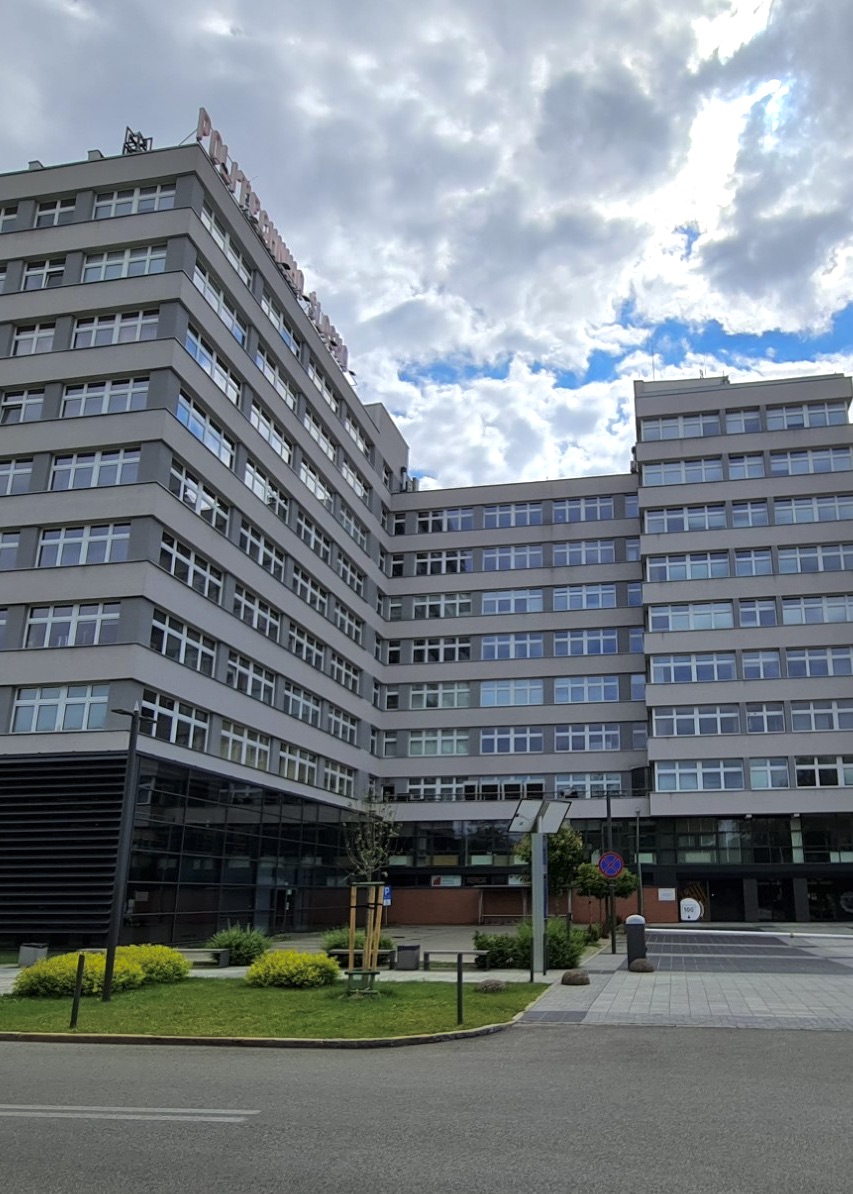
The MSc programme at the Silesian University of Technology was an international, English-language course within the Macrofaculty — a cross-disciplinary structure bringing together automation, electronics, and computer science. The programme focused on applied machine learning, statistical modelling, data engineering, and AI system design. Coursework covered neural network architectures, statistical inference, signal processing, and applied data science across healthcare and engineering domains.
The research environment was strongly interdisciplinary — my thesis, supervised by Professor Joanna Polanska, sat at the intersection of epidemiology, environmental science, and predictive modelling. This shaped how I think about data problems today: always asking what the real-world phenomenon is before choosing a model.
Type 1 diabetes mellitus (T1DM) is a sudden-onset, ultra-rare autoimmune disease affecting newborns and very young children — and its causes remain only partially understood. My research investigated the environmental and epidemiological factors that correlate with T1DM incidence rates in children from the Upper Silesian region of Poland, one of the most industrialised areas in Central Europe.
The core hypothesis was that T1DM onset might correlate with external environmental triggers rather than purely genetic predisposition. I built predictive models incorporating multiple external datasets and discovered statistically significant correlations across several unexpected variables.
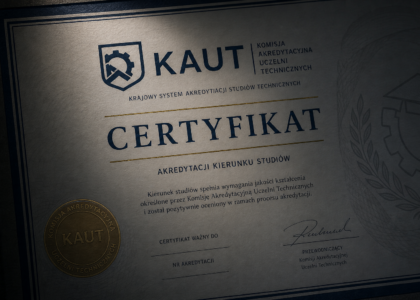
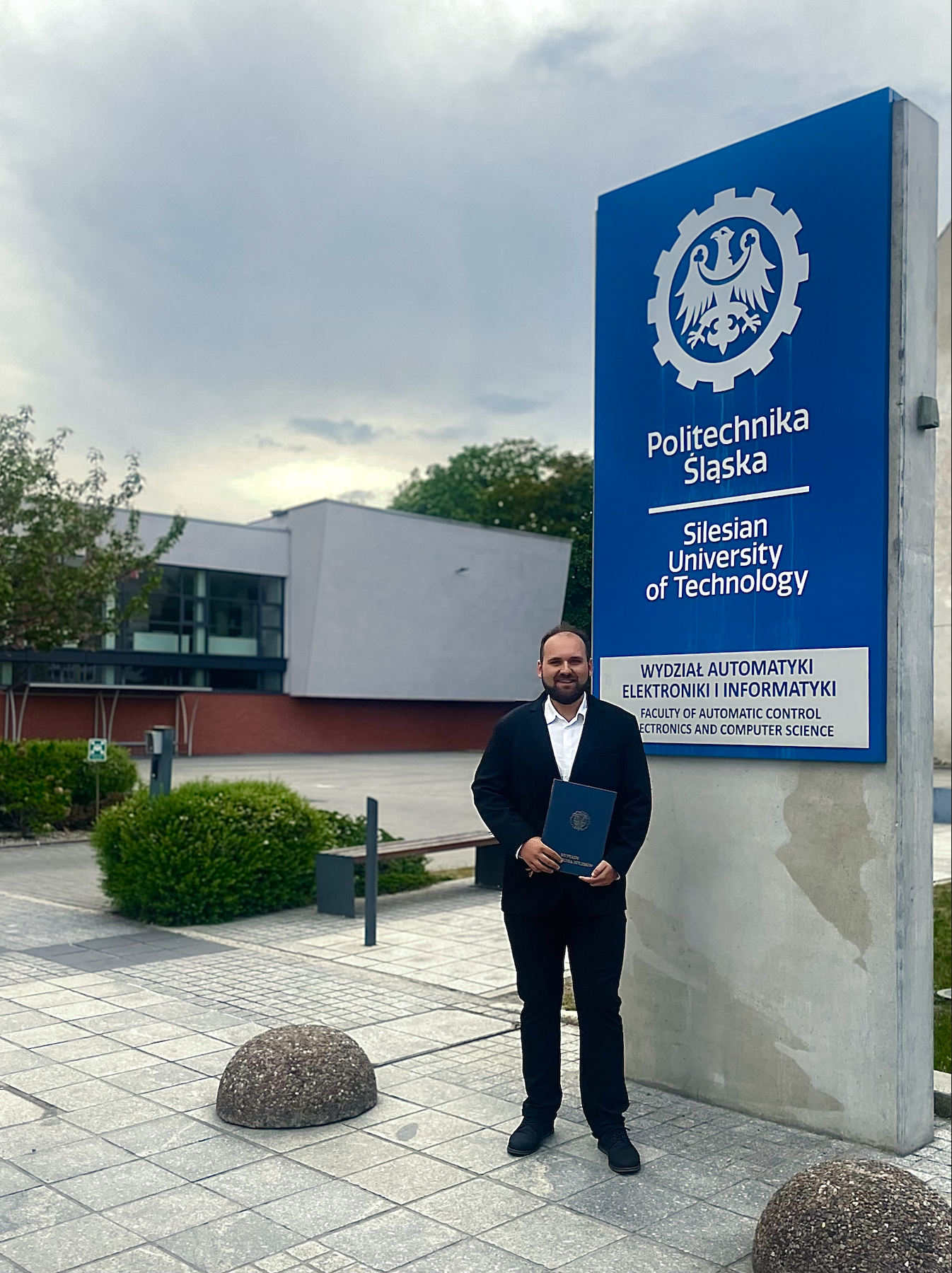
The BSc programme in Automation and Robotics at the Faculty of Automatic Control, Electronics and Computer Science is one of the most technically demanding engineering programmes in Poland. The curriculum covers control systems theory, electronics, signal processing, embedded systems, and computer science fundamentals — building a rigorous engineering foundation before any specialisation.
In the later years of the programme, the focus shifted toward applied AI and computer vision — which led directly to my engineering thesis, conducted under Dr. Franciszek Binczyk from the Department of Data Engineering and Exploratory Analysis. The thesis applied deep learning to a challenging real-world medical imaging problem, combining computer vision with clinical relevance.
Lung nodule detection in 3D MRI volumes is a challenging computer vision problem — nodules are small, their boundaries are ambiguous, and false negatives carry serious clinical consequences. The thesis explored whether a U-Net architecture, originally developed for biomedical image segmentation, could be effectively applied to detect and classify nodules of types C1, C2, and C3 in volumetric MRI data.
U-Net’s encoder–decoder structure with skip connections makes it particularly well-suited to medical image segmentation tasks where spatial context at multiple scales is important. The research involved building and training the network on annotated MRI volumes, evaluating segmentation performance across nodule types, and analysing the model’s sensitivity to the class imbalance inherent in rare nodule detection.
The mathematics and physics profile at Liceum Groszkowskiego in Zabrze provided a rigorous analytical foundation — advanced calculus, mechanics, electromagnetism, and formal logic — that directly underpins my later work in machine learning, signal processing, and data modelling. Graduating with distinction from this profile required not only technical competence but the ability to construct and communicate formal reasoning under examination conditions.
The school has a strong tradition in STEM education in the Zabrze region. The choice of the maths-physics profile was deliberate — a direct stepping stone toward the engineering and data science programmes at the Silesian University of Technology.
What my education means in practice
Both academic theses reflect the same underlying approach I bring to professional work: start with a real-world problem, build a rigorous data pipeline, apply appropriate models, and interpret results in context rather than chasing benchmark numbers. The T1DM research taught me to look for unexpected correlations in complex multi-source datasets. The U-Net work taught me that model architecture choices have real consequences when the cost of false negatives is clinical.
The combination of a strong engineering foundation from the BSc and applied AI/ML specialisation from the MSc is what allows me to bridge the gap between automation engineering and data science — understanding both the system-level constraints and the mathematical models that sit on top of them.